
When a failed water heater is an emergency
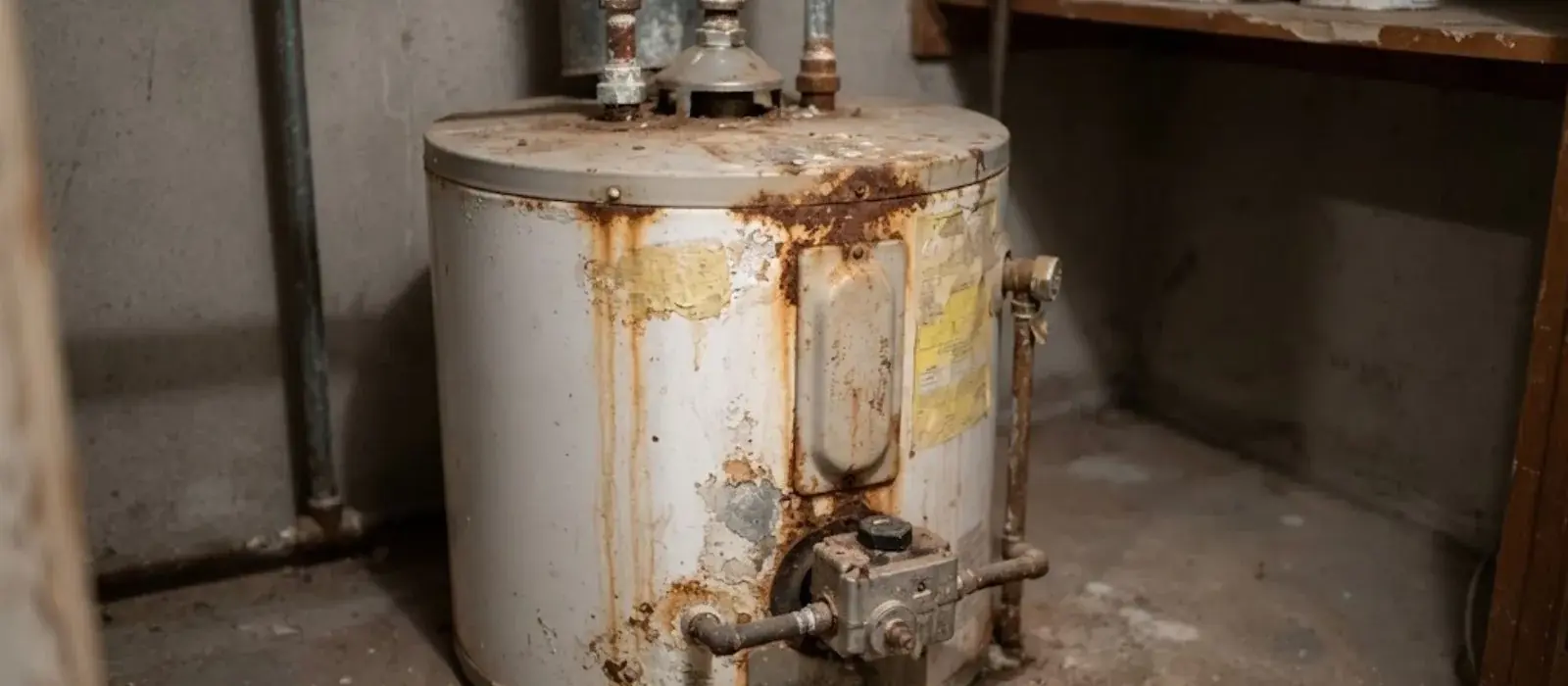
A tank that is leaking from its body cannot be repaired, and the leak usually gets worse. If water is pooling, you are looking at floor damage, mold risk and a flooded garage within hours.
Turn off the power or gas to the heater, close the cold-water shutoff above it and open a hot-water faucet somewhere in the house to relieve pressure. Then call (714) 750-8637. Our line is open 24/7, and we plan the replacement for the soonest appointment available.
How replacement works
The plumber drains the old tank, disconnects water, gas or power and vent connections, and removes the unit. The new heater is set, leveled and connected with new flexible connectors where needed. Gas units get a leak test at the fittings, and electric units get a power check.
The relief valve and its discharge pipe are checked or replaced, and an expansion tank is recommended where the plumbing calls for one. The last step is filling the tank, purging air and confirming hot water at the fixtures.
Which type of heater fits your home?
This is a general guide. The right choice depends on gas availability, venting, space and how much hot water you use.
| Type | Fits best when | Trade-off |
|---|---|---|
| Gas tank | You already have gas and a vent | Venting must be correct, standby heat loss |
| Electric tank | No gas line, simple install | Slower recovery, higher energy use in many homes |
| Tankless gas | You want on-demand hot water and have the gas and vent capacity | Higher upfront cost, scale maintenance, see tankless water heaters |
| Heat pump tank | You want lower energy use and have space and airflow | Larger unit, needs clearance and a drain |
Signs it is time to replace instead of repair
A single symptom is not always a replacement trigger, but these usually point that way.
Leak from the tank body
The steel vessel has corroded through. A new valve or fitting cannot fix this.
Rusty hot water
Rust coming only from the hot side often means the tank is corroding inside.
Age over 10 to 12 years
Even working tanks near the end of typical life can fail without warning.
Repeated repairs
Two or three repairs in a year tend to cost more than a replacement does.
Hard water and your new heater
Fountain Valley's average hardness is 13 grains per gallon in the city's 2026 report, with a range of 10 to 15. That is hard water by the city's own 10 grain mark. A new tank filling with hard water starts building scale from the first heat cycle, so ask the plumber about the anode rod, a yearly flush and whether a water softener is worth pricing.
Tankless units are even more sensitive, because scale inside the heat exchanger cuts flow and triggers error codes. A descaling schedule is part of owning one here.
Tank failed? Plan the replacement now.
Call the 24/7 line and ask for the soonest appointment.
Permits and what to expect
The City of Fountain Valley's Building Division, at 10200 Slater Avenue, states that work on plumbing and gas systems goes through the building official's permit process. The Permit Center portal handles applications electronically. Permit rules vary, so ask the Building Division at 714-593-4429 what applies to your replacement.
The plumber can explain what the job needs, but the city makes the final call on its own rules. Counter hours at the Building Division are Monday through Thursday, 7 a.m. to 6 p.m., and closed Fridays, so plan questions around that.
What water heater replacement costs
Replacement prices depend on the heater and the install. You get a clear price before work starts, and we will not hand you a number over the phone that changes on arrival.
What moves the final number
Many manufacturer warranties require proper installation. Keep the invoice and model information. Call (714) 750-8637 for the real number on your install.
What not to do with a failed heater
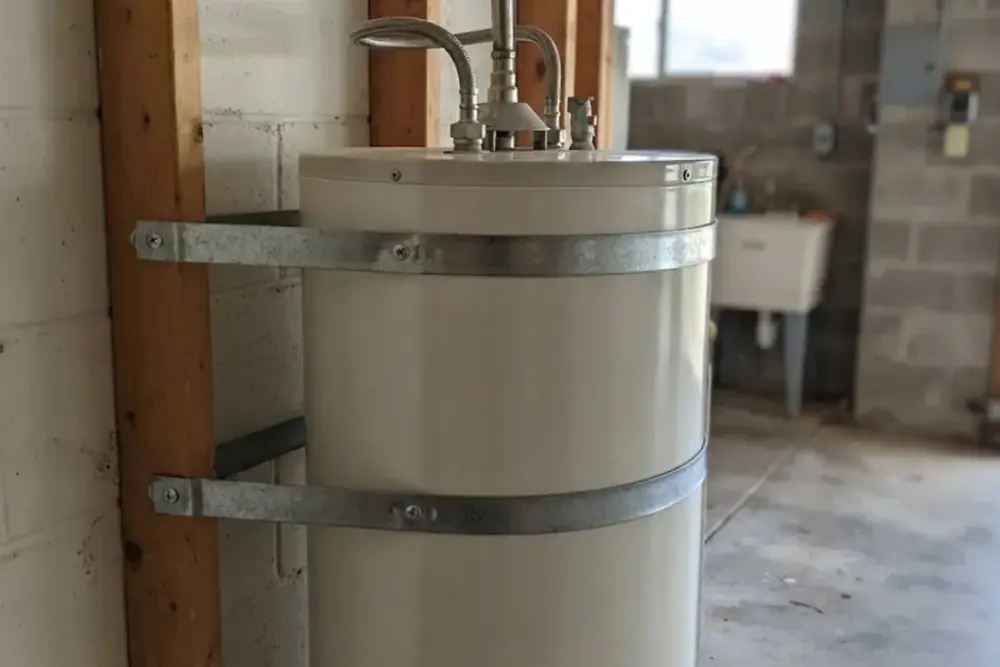
Do not relight a pilot on a tank that is leaking, do not cap or plug the relief valve and do not drain a hot tank onto carpet. The California Plumbing Code, based on the UPC, requires a relief valve and discharge line on every tank, and California law requires bracing against earthquake movement. A new install should meet both.
Seismic strapping and safety
Water heaters in California are commonly secured with straps to the wall studs to reduce the risk of tipping in an earthquake. Ask the plumber what applies to your install and have it done while the unit is open and accessible.
A heater that is not strapped, has a rusted base or sits on an uneven platform is something to correct at replacement time.
Common Questions
Yes. Call (714) 750-8637 any hour. A leaking tank is treated as urgent and we offer same-day appointments when available.
A standard like-for-like tank swap is often a few hours. Moving a heater, changing fuel type or upgrading venting can take longer, and the plumber will tell you before starting.
It depends on gas capacity, venting, budget and how much you value endless hot water. Tankless costs more up front and needs descaling, which matters with Fountain Valley's hard water.
The plumber removes it from the site. Ask about disposal before the job starts so there are no surprises on the invoice.
Often yes, though HOA rules may limit where a unit can go and which type is allowed. Check with your association first.
Same-day appointments are offered when they are available. The soonest slot depends on stock and the day's call volume, so call as early as you can.