
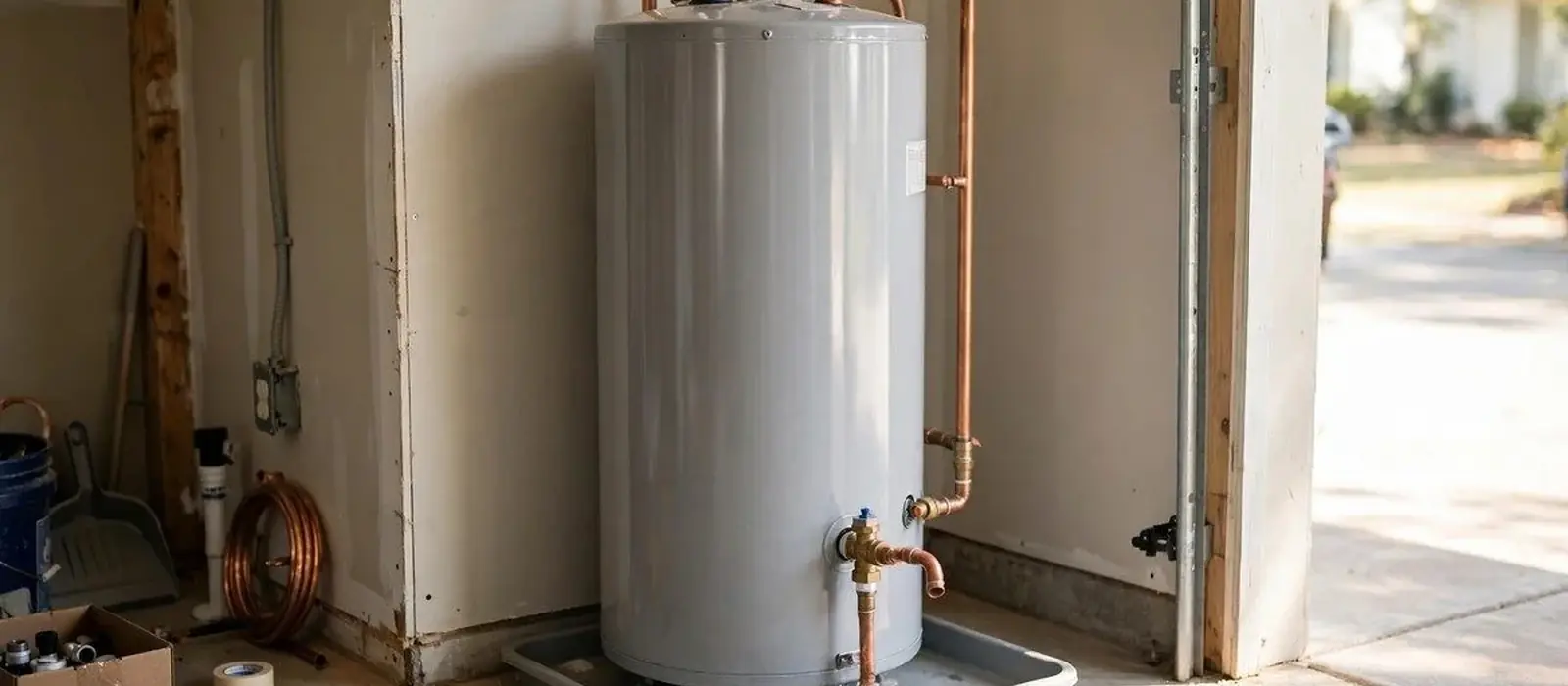
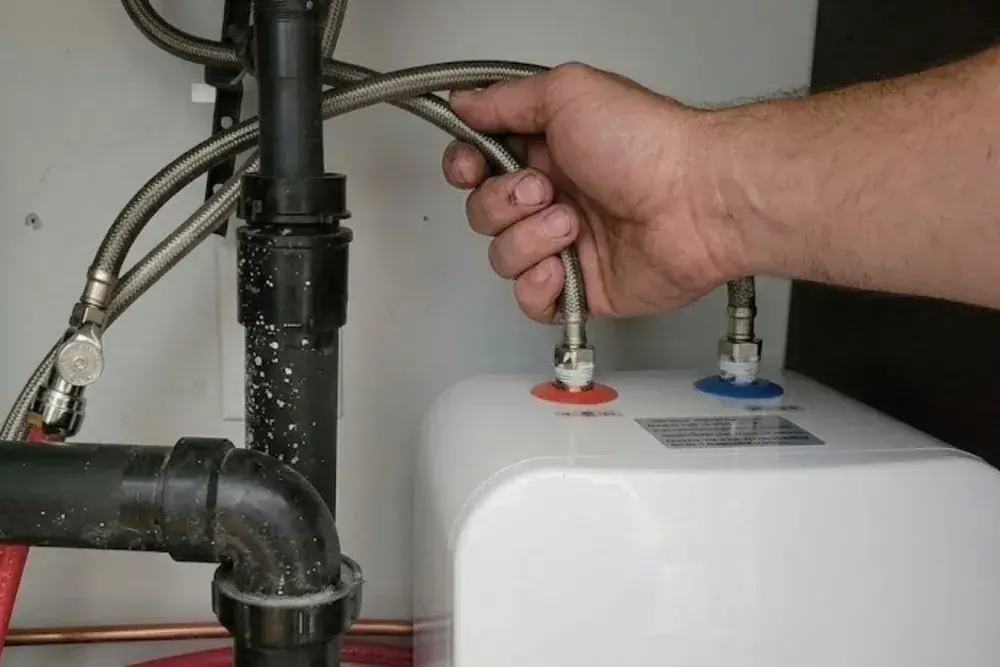
Choosing a water heater type
The decision starts with what you have. A gas tank swapped for a gas tank is the simplest. Switching fuel type, adding a tankless unit or moving the heater changes the gas line, vent, electrical or water connections, and each adds work.
Household size and usage set the capacity. Space and venting set what is possible. The plumber measures the location, checks the existing connections and recommends options rather than a single product.
Water heater types compared
A general comparison. Final choice depends on your home.
| Type | Fits best when | Consider |
|---|---|---|
| Gas tank | Gas and a vent already in place | Venting and combustion air |
| Electric tank | No gas line or a simple retrofit | Electrical capacity |
| Tankless | You want on-demand hot water and have capacity | Gas line size, descaling, see tankless page |
| Heat pump | You want low energy use and have space and airflow | Clearance and drain |
How an installation goes
Site check
The plumber measures the space, checks venting, gas and electrical, and confirms the plan.
Remove the old unit
The tank is drained, disconnected and removed.
Set and connect
The new heater is placed, leveled and connected to water, gas or power and vent, with a new relief valve line.
Test and explain
Pressure, leaks, temperature and combustion are checked, and the controls are explained to you.
Hard water in the planning
Fountain Valley's 2026 water quality report lists average hardness of 217 milligrams per liter, or 13 grains per gallon. In the city's own words, hardness of 10 grains or more is considered hard. Scale builds on elements and tank floors, so ask about anode rod options, a yearly flush plan and a water softener.
Tankless units are more sensitive to scale, and descaling schedules matter more. Decide on the maintenance plan before you buy.
Ready to plan the install?
Call to schedule a site check and get a clear price.
Permits, strapping and code
Water heater installations commonly need a plumbing permit, and California rules call for seismic strapping on tank heaters. The City of Fountain Valley Building Division at 10200 Slater Avenue handles permits, and you can reach it at 714-593-4429. Permit rules vary, so confirm what applies to your install.
The plumber can explain the work and the inspection, and a permitted install keeps the record clean for a future sale.
What water heater installation costs
Installation prices depend on the unit and the site. You hear a clear price before work begins.
What moves the final number
Manufacturer warranties often depend on proper installation. Keep the paperwork. Call (714) 750-8637.
Code requirements for a new install
A new install follows the California Plumbing Code, based on the Uniform Plumbing Code (UPC), which calls for a relief valve and discharge line, and California law requires bracing against earthquake movement. Gas units also need proper venting and combustion air, and electric units follow the California Electrical Code, based on the National Electrical Code (NEC).
Moving or relocating a heater
Relocating a heater means new gas, water and vent runs, and sometimes a new electrical circuit. It can be worth it to free a closet or to place the unit closer to the fixtures that use the most hot water.
Shorter pipe runs also mean less wait for hot water at the tap.
Common Questions
A like-for-like swap is often a few hours. Fuel changes, relocations and tankless installs take longer.
Yes, the old unit is removed from the site. Confirm disposal details when you book.
Often yes, if the electrical panel has capacity. The plumber and an electrician can confirm.
Usually. Ask the Fountain Valley Building Division at 714-593-4429 what applies at your address.
It depends on household size and usage. The plumber can recommend a size after asking about showers, laundry and dishwasher habits.
No, see the emergency replacement page. Or call (714) 750-8637 and we will plan same-day service when available.