
How tankless heaters work
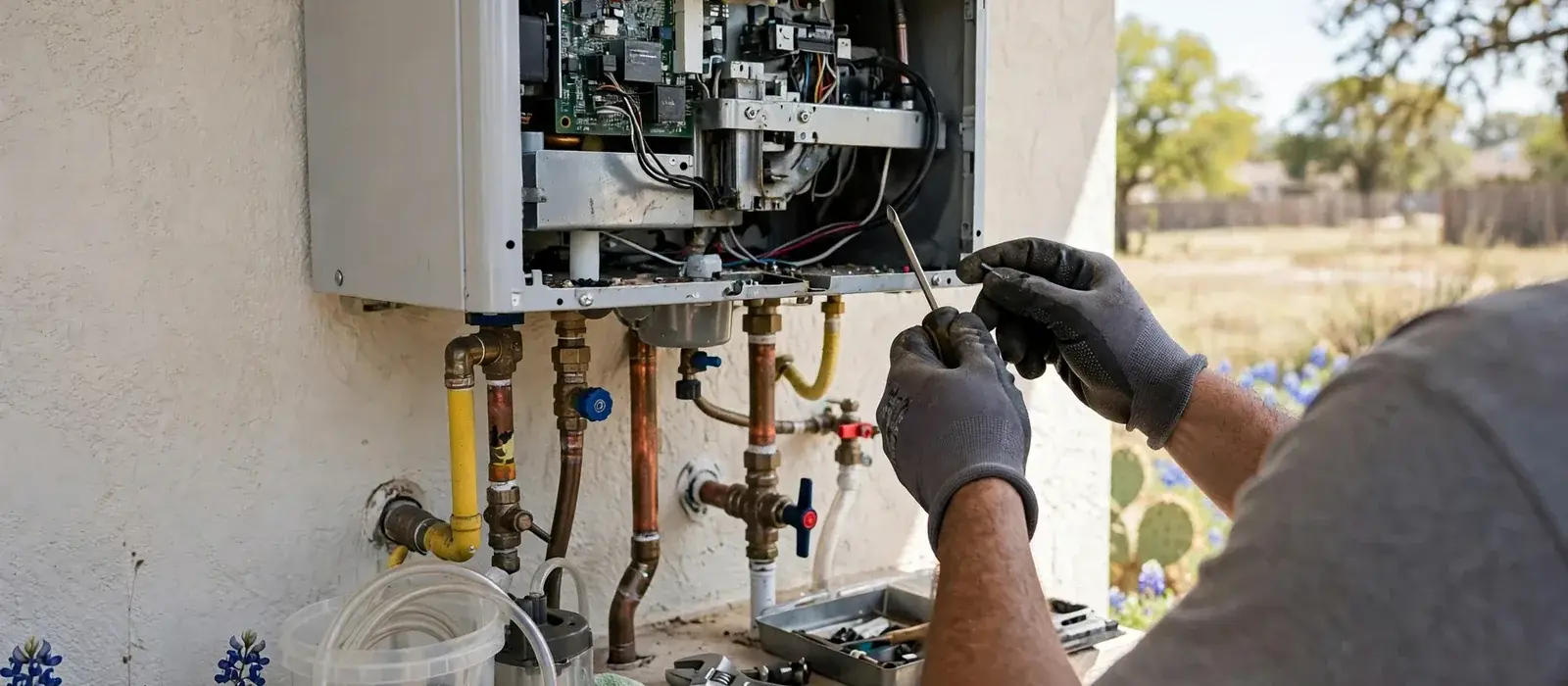
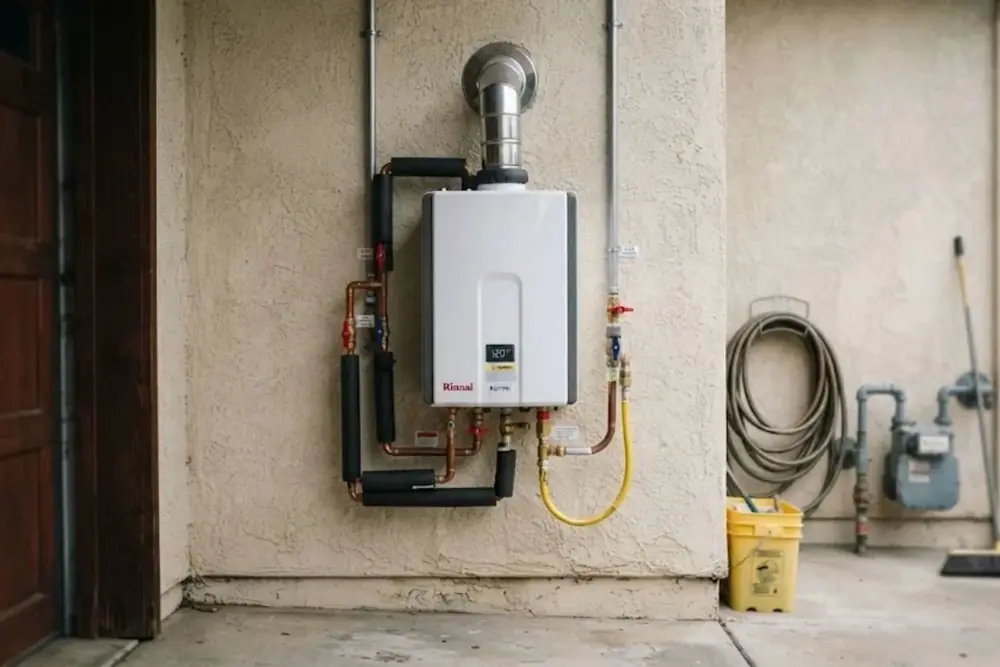
A tankless heater turns on when a tap opens. A flow sensor starts the burner or elements and a heat exchanger warms the water as it passes through. There is no stored supply to run out, which is why households with big demand like them.
The trade-offs are cost, gas capacity and maintenance. A tankless unit may need a larger gas line than a tank heater, and a vent that suits the exhaust. It also needs descaling in hard water areas.
Symptoms that call for a service visit
Most tankless problems fall into a few categories.
Error codes
Often scale, a flow problem or a venting issue. The code points to the right test.
Cold water sandwich
A brief cold burst between hot water uses, common with short draws.
Weak hot water flow
Scale in the heat exchanger or a clogged inlet filter.
Unit shuts off mid-use
Overheating from scale or a flame sensor fault.
Descaling and hard water
Fountain Valley's 2026 water quality report lists average hardness of 13 grains per gallon with a range of 10 to 15. Minerals bake onto a tankless heat exchanger, narrow its passages and trigger error codes. A flush with a descaling solution removes the scale.
Manufacturers commonly recommend a yearly flush in hard water areas. A water softener reduces how fast scale forms. The plumber can tell you whether a flush or a softener is the better first step.
Flush, repair or replace?
A rough guide for tankless units.
| Symptom | Usually | Notes |
|---|---|---|
| Weak flow, scale codes | Flush | Yearly in hard water |
| Flame or ignition fault | Repair | Sensor, igniter or gas supply |
| Heat exchanger leak | Replace the part or unit | Depends on age and warranty |
| Undersized for household | Upgrade | See installation |
Tankless unit acting up?
Call to book a flush or a repair visit.
Installing a tankless unit
A tankless install often needs a gas line check, a new vent, a condensate drain for high-efficiency models and sometimes an electrical outlet. The unit mounts on a wall. The plumber confirms these before work begins.
If you are switching from a tank, tell the plumber about your peak demand. Two showers and a dishwasher running together is the usual test.
What tankless service costs
Installs and flushes are priced differently. You hear a clear price before work begins.
What moves the final number
Isolation valves make yearly flushing simpler and cheaper. Ask about them. Call (714) 750-8637.
Questions to ask before you buy
Ask what the gas line must carry, whether venting needs to change, where the condensate will drain and who handles the permit. Ask what the maintenance schedule looks like and what a flush costs.
Also ask about the warranty. Some require proof of yearly maintenance. A plumber who installs units regularly will know the details.
Standards for gas and venting
Tankless installs follow the California Plumbing Code, based on the Uniform Plumbing Code (UPC), along with the manufacturer's venting and gas sizing rules. Electric units follow the California Electrical Code, based on the National Electrical Code (NEC). Skipping a vent or gas check is how safety problems start.
Is tankless right for you?
Tankless suits households that value endless hot water, have space limits or want a smaller footprint. It is less appealing if your gas supply is limited, your hot-water use is light or you dislike regular maintenance.
The plumber will help you weigh these. A tank heater is still a sound choice for many homes.
Common Questions
Many manufacturers suggest yearly in hard water areas. Fountain Valley's city report lists average hardness of 13 grains per gallon.
We service major brands. Tell us the make and model when you call.
Scale, a venting problem and a flow issue are common. The code and the unit's manual narrow it down.
Often yes, but gas line size and venting must be checked first.
Some owners do it, but a plumber can do it faster and check combustion at the same time.
It is urgent but not usually dangerous. If you smell gas, leave the home and call the gas utility or 911 first. Otherwise call (714) 750-8637.