
When a hidden leak is an emergency
Water on the floor, a ceiling stain that is spreading or a sound of running water in a quiet house means water is escaping now. A meter that runs after you shut off every fixture means the same thing, even if you cannot see it.
Close the main shutoff valve, which cuts supply to the whole house, and check whether the meter stops. Take photos of any wet areas, and keep the power off in rooms where water is near outlets. Our emergency line is open 24/7 at (714) 750-8637.
Is the meter running when everything is off?
This is the simplest leak test and the first thing most callers describe. Turn off every faucet, appliance and irrigation zone, then look at the meter. The small dial or low-flow indicator spinning means water is moving through the line.
Close the main shutoff at the house. If the meter stops, the leak is inside the house. If it keeps moving, the leak is between the meter and the shutoff, which is the service line. That split tells the plumber where to start, and it is the first question we ask on the phone.
How hidden leaks show themselves
Water travels from the leak before it shows. These are the clues that usually lead to a detection visit.
High water bill
A slow rise over a few billing cycles with no change in use is the classic sign of a small leak.
Warm spot on the floor
A hot-water line leaking under a slab can warm the floor above it.
Sound of running water
A faint hiss or trickle when the house is quiet means pressurized water is escaping.
Musty smell or stain
Ceiling, wall or baseboard staining often traces back to a pipe above or behind it.
How we find a leak without opening walls
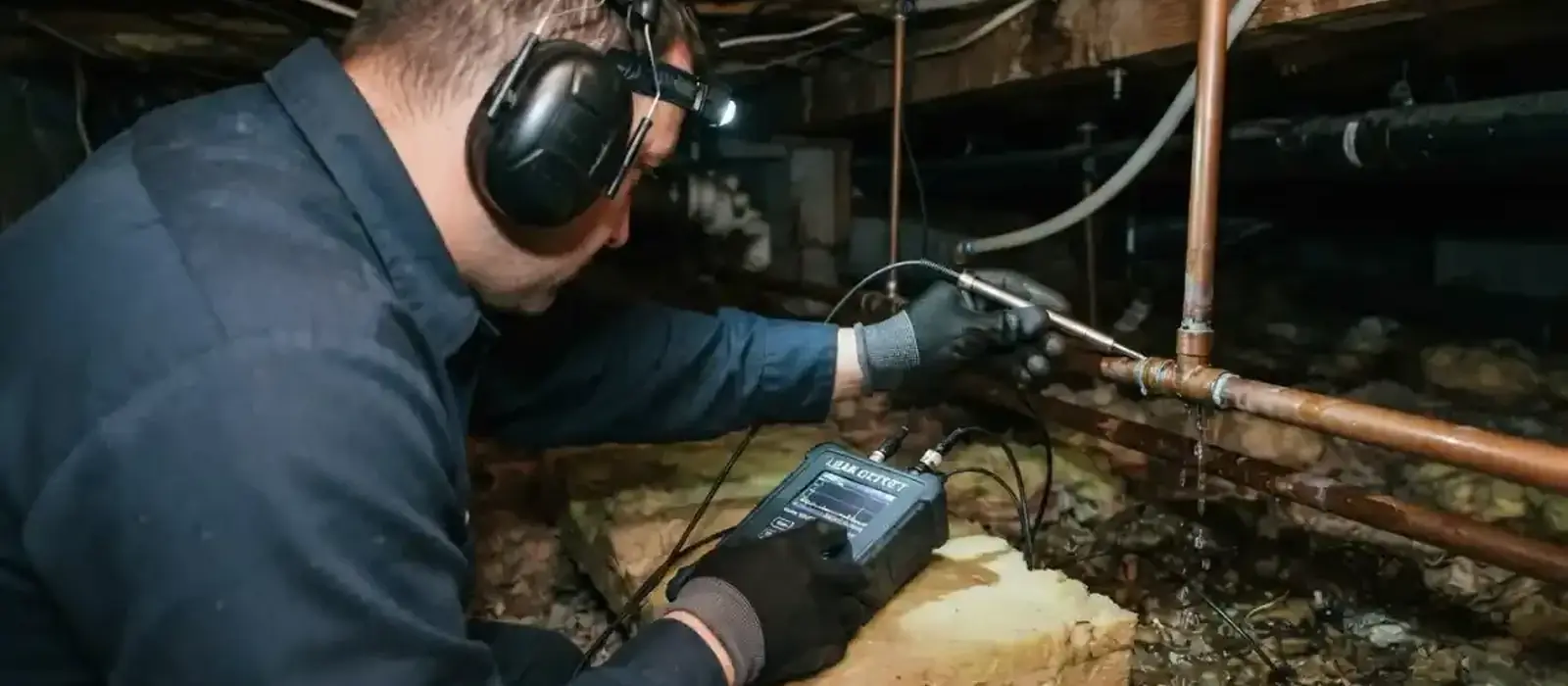
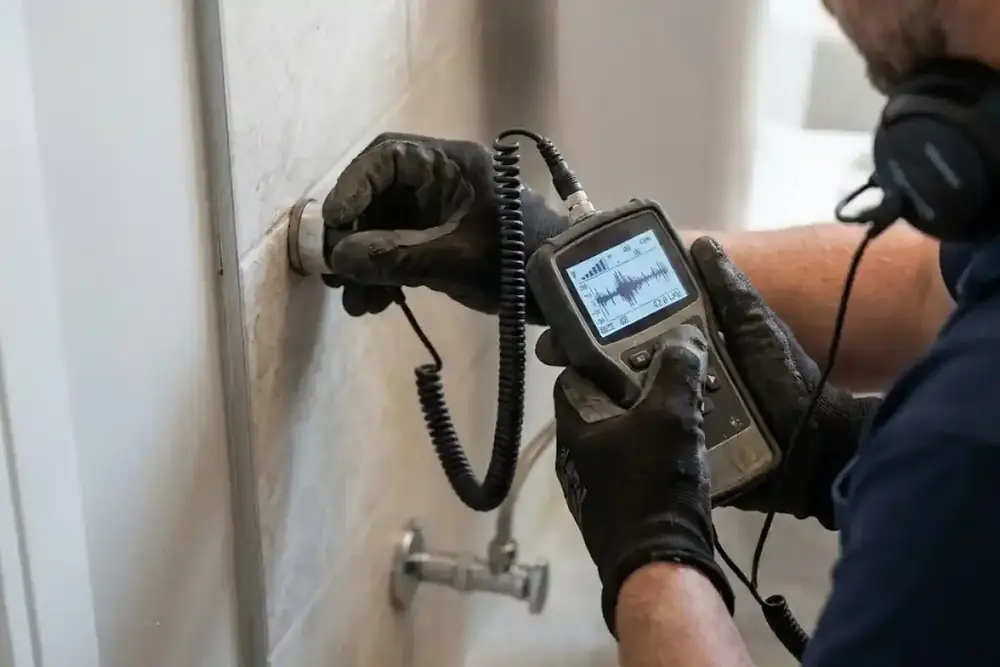
Detection starts with the meter test and a pressure test on the supply lines to separate the hot and cold sides. Acoustic listening devices then pick up the sound a leak makes as it travels through the pipe and the ground. Thermal cameras show temperature differences caused by hot-water leaks or damp insulation.
Tracer gas and line locators confirm the pipe route before anyone cuts anything. The goal is to open the smallest area possible, and the plumber will explain what was found before suggesting a repair.
Ceiling, wall and under-house leaks
A stain on a ceiling is not always the location of the leak. Water runs along framing and drywall before it shows. The plumber checks the room above, the plumbing walls nearby and the attic or crawlspace before deciding where to open.
For under-house or crawlspace areas, the first look is for dripping, wet soil and corrosion on lines and shutoff valves. Many Fountain Valley homes are slab-on-grade, so crawlspace access may not apply to your house, and the plumber will tell you which category yours falls into.
Where is the leak?
The meter test narrows the location. This table shows the usual starting point for each result.
| Meter test result | Likely area | Next step |
|---|---|---|
| Meter stops when the main closes | Inside the house or under the slab | Pressure test, then acoustic and thermal check |
| Meter keeps moving with main closed | Service line between meter and house | Line tracing and water line repair options |
| Meter stops, but a bill is still high | Irrigation, pool or intermittent fixture | Check toilets, irrigation zones and appliances |
| Warm floor or sound under slab | Hot-water line below the slab | See slab leak repair |
Meter still running?
Call the 24/7 line and describe what the meter is doing.
High bills, irrigation and pool leaks
Not every high bill is a pipe leak. A running toilet flapper can waste a surprising amount of water without any visible sign. An irrigation valve stuck open or a leaking sprinkler line sits outside, where you only see a green patch or a wet bed.
If you have a pool or spa, the water loss test and the plumbing loss test are different. The plumber can check the supply and return lines if they are on the property.
What leak detection costs
Leak detection is a diagnostic service, and its price depends on how hard the leak is to find. You hear the price before the visit starts.
What moves the final number
Some insurance policies cover the cost of finding a leak when it causes sudden damage. Ask your insurer before the visit. Call (714) 750-8637 to book.
Rules that follow a found leak
Once a leak is found, the repair falls under the California Plumbing Code, which is based on the Uniform Plumbing Code (UPC). Small repairs usually need no permit, while re-routing lines or replacing a run often does. The plumber explains which applies before work starts.
Landlords, property managers and commercial sites
If you manage a rental or a small business, tell the dispatcher when you call so the visit can be scheduled with the tenant or staff. A commercial leak may involve larger lines or multiple meters, and our commercial plumbing page explains what we handle.
Document who is responsible for the line, since the owner or the tenant may be liable for repairs under the lease.
Common Questions
Yes. Call (714) 750-8637 any time. If water is actively escaping, close the main shutoff first and tell the dispatcher so the visit can be prioritized.
Turn off every fixture and check the meter's low-flow indicator or small dial. If it moves, water is flowing. Close the main shutoff to see if the movement stops.
Only after the leak is located and you approve the repair plan. Detection uses non-invasive tools so that any opening is as small as possible.
Generally the water utility is responsible up to the meter and the homeowner is responsible beyond it. Ask the City of Fountain Valley water utility if you are unsure where the meter sits.
Sometimes, when sudden damage results. Policies differ, so ask your insurer before the visit.
See our slab leak repair page. The options include rerouting the line, repair from above or lining, and the plumber explains the trade-offs on site.