

When a slab leak is an emergency
A slab leak becomes an emergency when water shows up on the floor, a wall base or carpet, or when the meter spins fast with everything off. Water under a slab can undermine soil, lift flooring and feed mold in walls.
Close the main shutoff and keep people off wet floors near outlets. Turn off the water heater if hot water is involved. Call (714) 750-8637. The line is open 24/7, and a plumber will locate the leak before any concrete is opened.
What a slab leak is
In slab-on-grade homes, supply lines can run through or under the concrete floor. Over decades, copper can develop pinholes from corrosion, friction at bends or aggressive water. A hole as small as a pin lets pressurized water escape continuously.
Many Southern California homes built in the mid-century decades sit on slabs, so the question matters for older Fountain Valley neighborhoods. Whether your home has under-slab lines depends on how it was plumbed. The plumber can check the layout.
Signs of a slab leak
These show up in the order a household usually notices them.
Warm spots on the floor
A hot-water leak warms the concrete above it. Bare feet notice before eyes do.
Sound of running water
A quiet house with a hiss or trickle when fixtures are off.
Meter movement
The meter keeps spinning after the main is open and everything is off.
Damp carpet or cracks
Moisture rising from below can stain carpet, lift tile or bubble baseboards.
Repair options compared
The right choice depends on where the line runs and how many leaks there are.
| Option | How it works | Trade-off |
|---|---|---|
| Spot repair | Cut the slab above the leak and fix the pipe | Fast for one leak, concrete and flooring need patching |
| Reroute | Cap the old line and run a new one overhead | Avoids the slab, runs through walls or ceilings |
| Pipe lining | Coat the inside of the existing pipe | Needs access and a pipe fit for lining |
| Repipe | Replace the supply lines, see repiping | Best when leaks keep appearing |
Hearing water that should not be running?
Call the 24/7 line and ask about a leak check.
How the leak is located
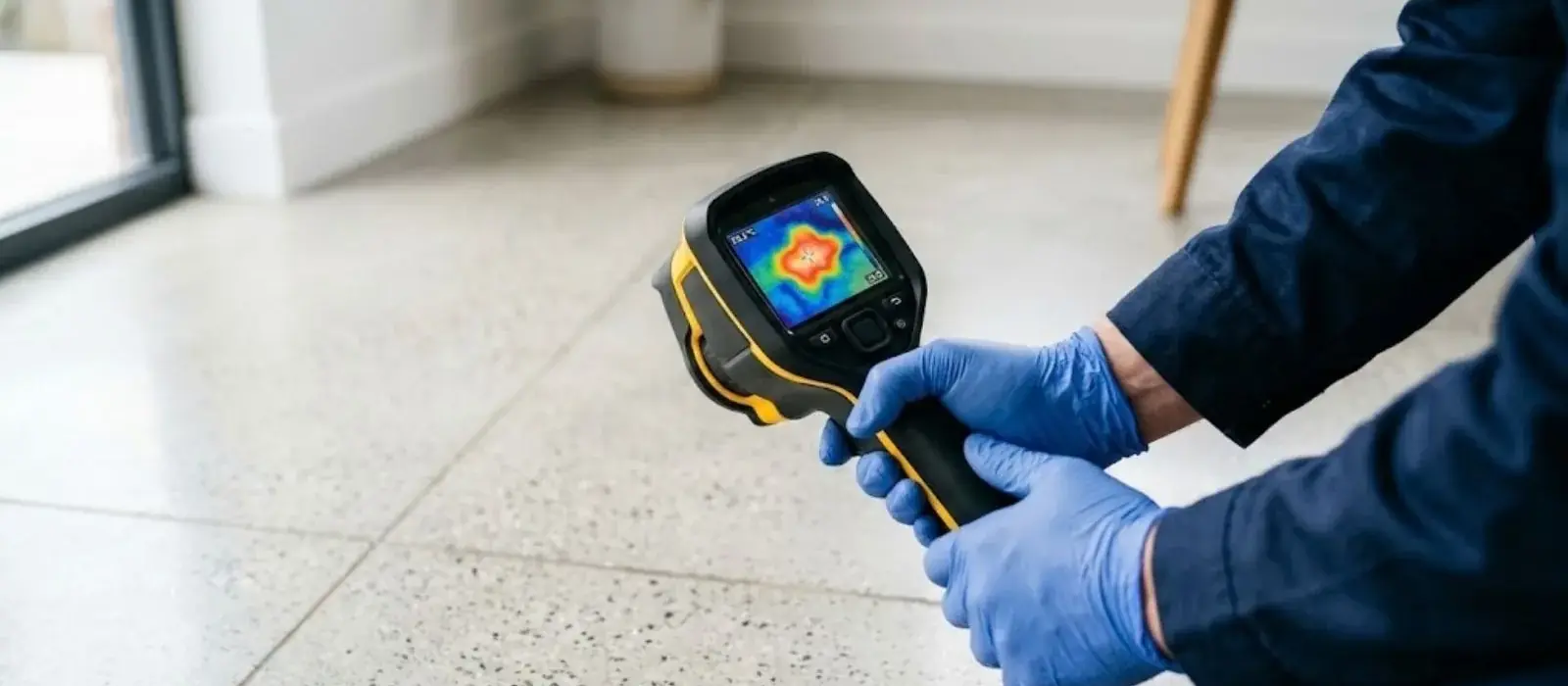
Detection starts with the meter test, then isolating hot and cold lines. Acoustic listening tools pick up the sound of escaping water through concrete, and thermal imaging shows warm patches. Line locators map the route of the pipe so that any opening is placed accurately.
The aim is to cut the smallest area. A photo or a mark on the floor shows exactly where, and you approve the plan first. More detail is on our leak detection page.
Hard water and pipe wear
Fountain Valley's 2026 water quality report lists average hardness of 13 grains per gallon with a range of 10 to 15. Hardness alone does not cause pinholes, and copper corrosion depends on water chemistry, velocity and installation. Still, scale and mineral buildup can affect fixtures and water heaters, and a plumber will mention it when relevant.
If your slab lines are original, ask for a pressure reading too. High pressure can accelerate wear.
What slab leak repair costs
Slab leak work is a bigger job than a surface repair, and the price depends on method. You hear the price before work starts.
What moves the final number
Many insurance policies cover access and the resulting damage in some cases, and exclude the pipe itself. Ask your insurer before work. Call (714) 750-8637.
Permits for reroutes and repipes
Reroutes and repipes fall under the California Plumbing Code, based on the Uniform Plumbing Code (UPC), and normally need a permit and an inspection. A small spot repair may not. The Fountain Valley Building Division at 714-593-4429 can confirm what applies.
What to do while you wait
Keep the main closed if the leak is active and use bottled water for drinking if needed. Open windows to ventilate damp rooms, lift rugs and move furniture off wet flooring. Photograph everything.
If the water heater is involved, turn it off at the breaker or gas control to avoid running it dry.
Common Questions
Yes. Call (714) 750-8637 at any hour if water is on the floor or the meter is spinning fast. Close the main shutoff and tell the dispatcher what you see.
Typical signs are warm floor areas, the sound of running water, a spinning meter with fixtures off and unexplained bills. A plumber confirms with testing.
Sometimes. A reroute or lining may avoid it. If a spot repair is the best option, the opening is as small as possible and you approve it first.
It depends on the method. Spot repairs can be done in a day. Reroutes and repipes take longer. The plumber gives you an estimate of the schedule with the price.
It varies. Policies often cover resulting damage but not the pipe. Ask your insurer before work begins.
Many slab homes do, though layouts differ. The plumber can trace the lines during a leak check.