
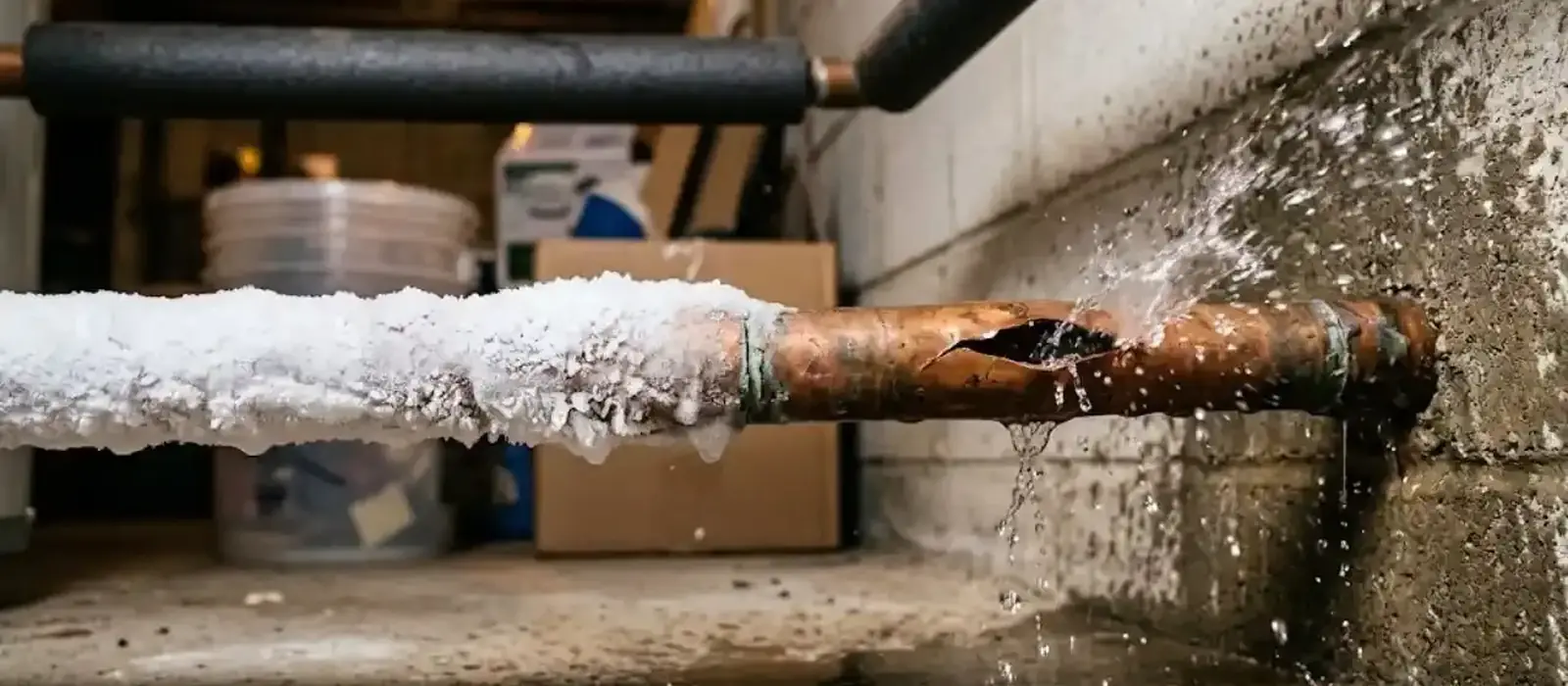
What to do in the first five minutes of a burst pipe
Find the main water shutoff and close it. It is often at the front of the house near the hose bib, in the garage wall or on a pole next to the meter, and it turns clockwise to close. Open one faucet at the lowest point of the house to drain the line.
Switch off power to affected areas only if you can reach the panel without stepping in water. Move valuables, lift rugs and take photos for your insurance company. Then call (714) 750-8637. The emergency line is answered 24/7.
How burst pipes happen in Southern California
Freezing is rare in Fountain Valley, so most breaks here come from age, corrosion, water pressure or ground movement. Old copper develops pinholes. Galvanized steel rusts from the inside until a section gives way. Fittings fail where pipes were soldered, glued or crimped decades ago.
High water pressure makes every weak spot worse. If your pipes bang when a valve closes or your fixtures spray more than they should, ask the plumber to test pressure when they are on site.
Signs of a broken or failing pipe
Not every break floods the house. These are the milder warnings that come first.
Sudden loss of pressure
Water that stops or slows in one fixture or the whole house points to a break or blockage.
Wet spot or bubbling paint
Water inside a wall pushes moisture to the surface before it drips.
Discolored or rusty water
Corroded galvanized pipe flakes rust into the line before it fails.
Hissing or dripping sounds
Pressurized water escaping inside a wall or ceiling makes a steady sound.
Repair options by pipe type
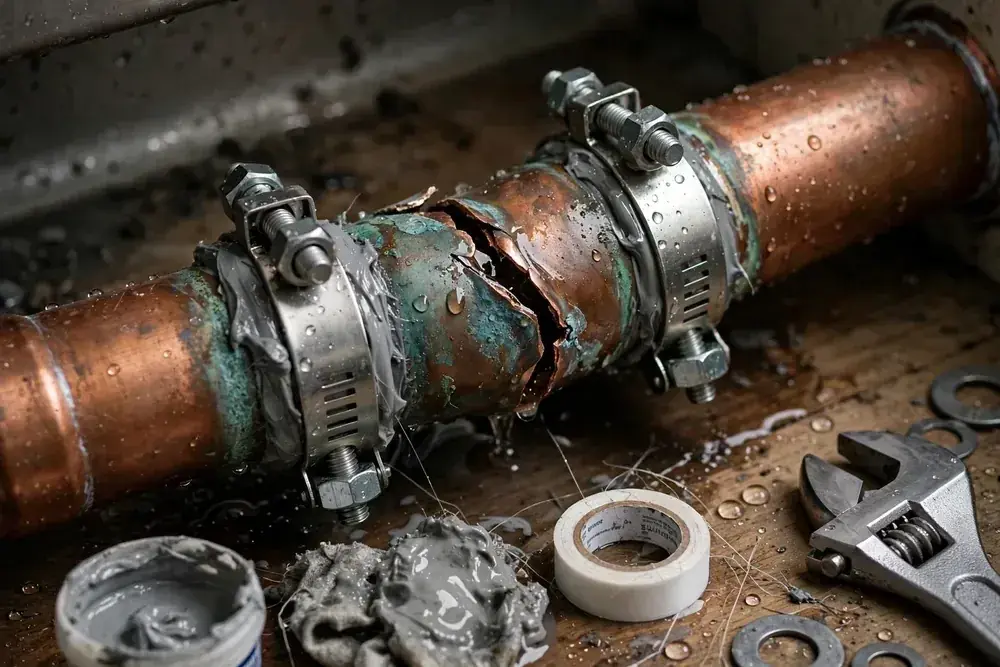
For a small section of copper, the plumber cuts out the damaged piece and joins a new length with fittings. PEX can be repaired with approved connectors. Galvanized pipe is harder, because the threads and the rest of the line are often corroded too, and a spot repair may only move the leak to the next weak joint.
When several leaks show up within a short time, the question shifts from repair to replacement. Our repiping page explains when replacing the supply lines costs less than chasing leaks.
Spot repair or replace the line?
Pipe material and the number of failures decide most of the advice.
| Pipe material | One break | Several breaks |
|---|---|---|
| Copper | Usually spot repair | Consider repiping if corrosion is widespread |
| PEX | Spot repair with approved fittings | Check fittings and the install method |
| Galvanized steel | Spot repair can be temporary | Repiping is often the better value |
| Unknown or mixed | Plumber identifies the material first | Plan for a scope that covers the whole run |
Water still running?
Call the 24/7 line and we will talk you through the shutoff.
Burst pipe vs hidden leak
A burst pipe is loud and fast. A hidden leak is quiet and slow, and the two need different first steps. If the water is visible and flowing, close the main and call. If the only sign is a bill or a stain, start with leak detection so the plumber finds the source before cutting into anything.
Both can cause the same damage over time, which is why we ask about timing and volume on the call.
What burst pipe repair costs
Emergency pipe repair is priced by the job, and you hear the number before the plumber begins.
What moves the final number
Insurance may cover sudden pipe bursts and resulting damage, but often not the cost of repairing the pipe itself. Ask before you file. Call (714) 750-8637 for your real number.
Pressure and the code
The Uniform Plumbing Code (UPC), which the California Plumbing Code is built on, calls for a pressure regulator when street pressure could exceed 80 psi. Spikes above that stress fittings and are a common reason pipes fail. If your pipes bang when valves close, ask the plumber to read pressure at the same visit.
After the repair
Once the pipe is fixed, run the affected fixtures to check for leaks and pressure. Keep photos and invoices for your insurance company, and ask the plumber for a note of what was repaired and where. Drywall, flooring and restoration are separate trades that we do not provide.
If the break happened in a home with older plumbing, ask the plumber to test water pressure and check shutoff valves at the same visit.
Common Questions
Yes. Call (714) 750-8637 at any hour. Tell the dispatcher whether you have found the main shutoff and whether water is still flowing.
Common locations are near the front hose bib, in the garage wall, beside the water heater or at the meter. Learn it before an emergency happens.
Temporary clamps or push-fit couplings can slow a leak, but a permanent repair needs the right fittings and a pressure test.
Often the resulting water damage is covered and the pipe itself is not. Policies vary, so call your insurer before filing.
Permit rules vary, so ask the Fountain Valley Building Division at 714-593-4429.
No. We repair the plumbing. Your insurer can recommend a restoration company for drying, drywall and flooring.