
Start with the water meter
The meter is the fastest test. Turn off every faucet, appliance and irrigation zone, then look at the meter. Many meters have a small dial or triangle that spins when any water flows. If it moves with everything off, water is leaking somewhere.
Next, close the main shutoff valve at the house. If the meter stops, the leak is inside the house. If it keeps moving, the leak is between the meter and the shutoff, which is the service line.
A 20 minute leak routine
Read the meter
Write down the reading, wait 15 minutes with all water off and read it again.
Run the toilet dye test
Add food coloring to each tank, wait 15 minutes without flushing and check the bowl for color.
Walk the house
Look under sinks, behind toilets, around the water heater and at washing machine hoses for dampness.
Check outside
Look at hose bibs, irrigation valves and the soil around the meter for wet or sunken ground.
Clues that a leak is hidden
Leaks inside walls and floors give indirect signs.
A bill that keeps climbing
Usage that rises with no change in habits is the classic warning.
Sound of running water
A hiss or trickle in a quiet house when nothing is on.
Musty smell
Mold needs moisture. A persistent smell can mean water behind a wall.
Warm floor spots
A hot water line leaking under a slab warms the concrete above it.
Toilets are the quiet water wasters
A worn flapper can leak into the bowl without making a sound. A faulty fill valve can run a thin stream down the overflow tube. Both can waste a lot of water in a month. The dye test finds the first one, and watching the water level in the tank finds the second.
Replacing a flapper is inexpensive. If you do not want to do it yourself, a plumber can handle it during another visit. Our toilet repair page covers more.
Where to start with the city
The City of Fountain Valley's 2026 water quality report states that the city supplied groundwater only in 2025. That means the water arriving at your meter comes from city wells, and billing and meter questions go to the city. Ask the city how to read your meter and whether a usage history is available for your account.
A meter that spins with every fixture off is information the city can use too. If the meter itself looks faulty, report it. If the leak is on your side, the repair is yours.
Source type: City of Fountain Valley 2026 Water Quality Report
If water is actively escaping
Close the main shutoff, keep people away from wet outlets and call a plumber. Photograph the damage for your insurer. For an active leak the 24/7 line is the right call, and leak detection follows once the water is off.
Where the meter test points
Use the result to narrow the search.
| Meter test result | Likely area | Next step |
|---|---|---|
| Stops when the main closes | Inside the house | Toilet test, fixtures, then professional detection |
| Keeps moving with the main closed | Service line to the house | Call a plumber to trace the line |
| Stops, bill still high | Irrigation, pool or intermittent fixtures | Check zones and appliances |
| Warm floor, sound under slab | Hot line below the slab | See slab leak repair |
How professionals find what you cannot see
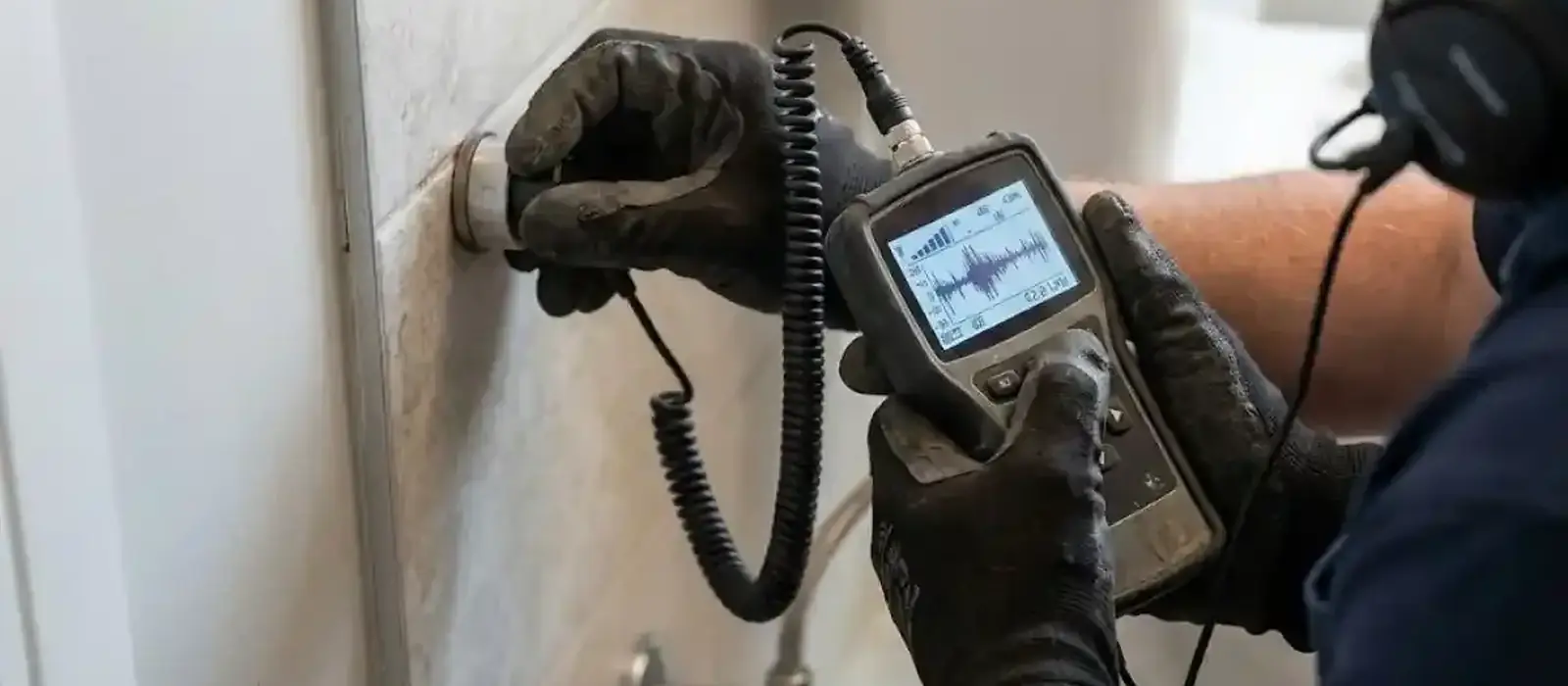
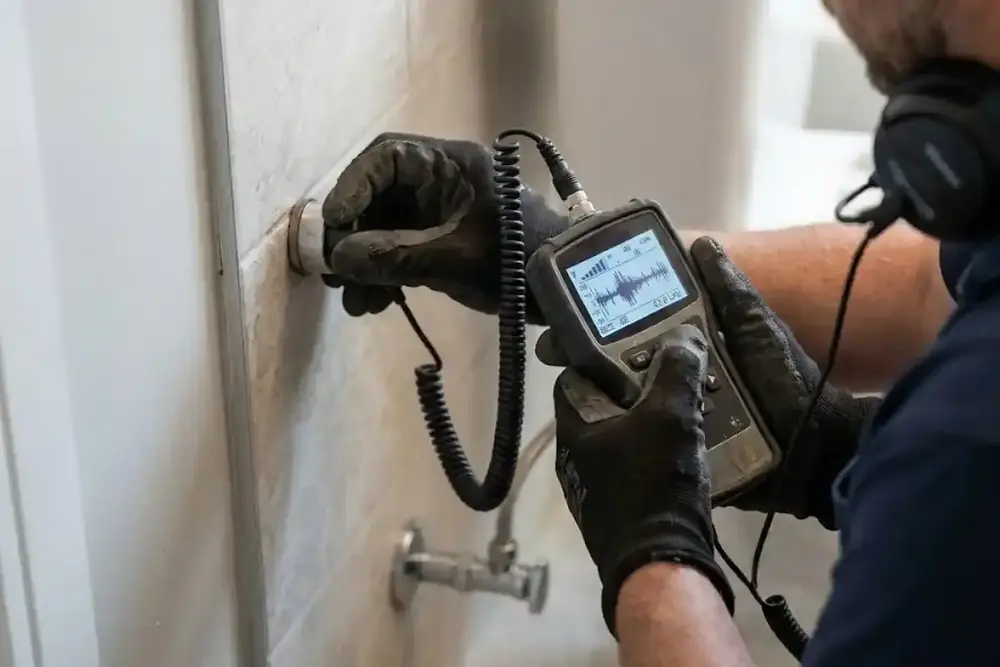
Plumbers use pressure tests to separate hot and cold lines, acoustic listening tools to hear a leak through pipe and soil and thermal cameras to see damp areas. Line locators trace pipe routes so any opening is placed correctly.
The point is to cut the smallest possible hole. Our leak detection page explains the process and the questions to ask.
What to do after you find a leak
Once you know a leak exists, close the nearest shutoff to the fixture. If you cannot find the source, close the main. Photograph the area, dry what you can and keep records of dates and readings.
Do not ignore a small leak. Water finds its way into framing and insulation, and mold can grow within a couple of days in damp conditions. A quick repair now costs less than drywall work later.
What to do while you look for a leak
Keep the main shutoff accessible, keep a flashlight and a notepad at the meter and avoid opening walls before testing. Repairs afterward follow the California Plumbing Code, based on the Uniform Plumbing Code (UPC), and re-routing lines usually needs a permit.
Getting help in Fountain Valley and Santa Ana
If your tests point to a leak, call. We serve Fountain Valley and the neighboring city of Santa Ana from the same 24/7 line, and a buried line problem is handled on the water line repair page.
The service areas page lists how coverage works for nearby cities.
Questions Fountain Valley Homeowners Ask
Turn everything off and watch the low-flow indicator or small dial. If it moves, water is flowing somewhere.
In general the utility handles the meter and the owner handles the line past it. Confirm with the City of Fountain Valley for your address.
Yes. A leaking flapper can waste a lot of water. The dye test finds it.
Sometimes, when a sudden leak causes damage. Check your policy.
Call a plumber. Detection tools find leaks inside walls and under slabs without guessing.