
When a backed-up line calls for emergency jetting
If sewage or gray water is rising in a tub, shower or floor drain, the line is blocked solid and a cable may only open a narrow channel. Jetting can clear the full diameter, though the plumber decides on site whether the pipe is sound enough for the pressure.
Stop using sinks, showers, the washer and the dishwasher right away. Do not pour chemical cleaners into a standing backup, because the plumber will be working in it. Call (714) 750-8637 and the 24/7 line will plan the soonest visit.
How hydro jetting works
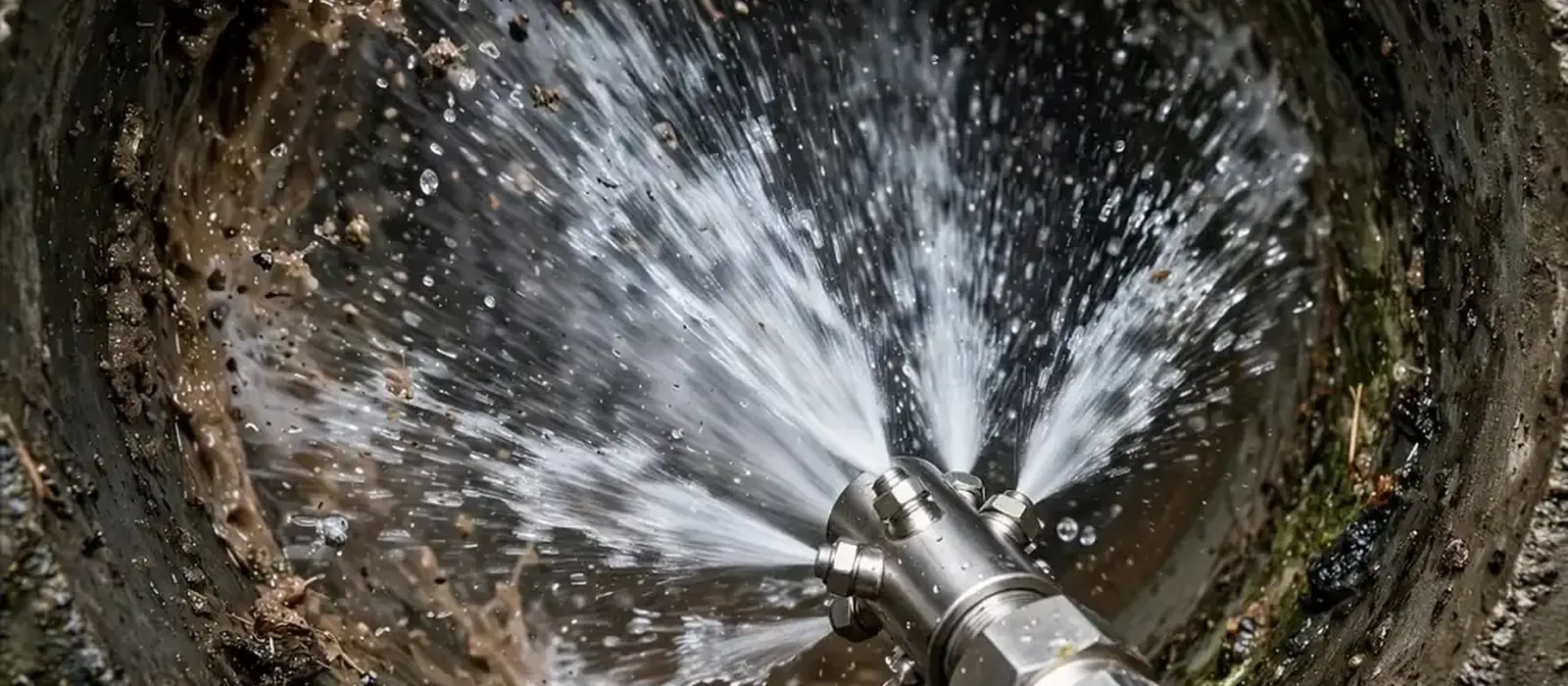
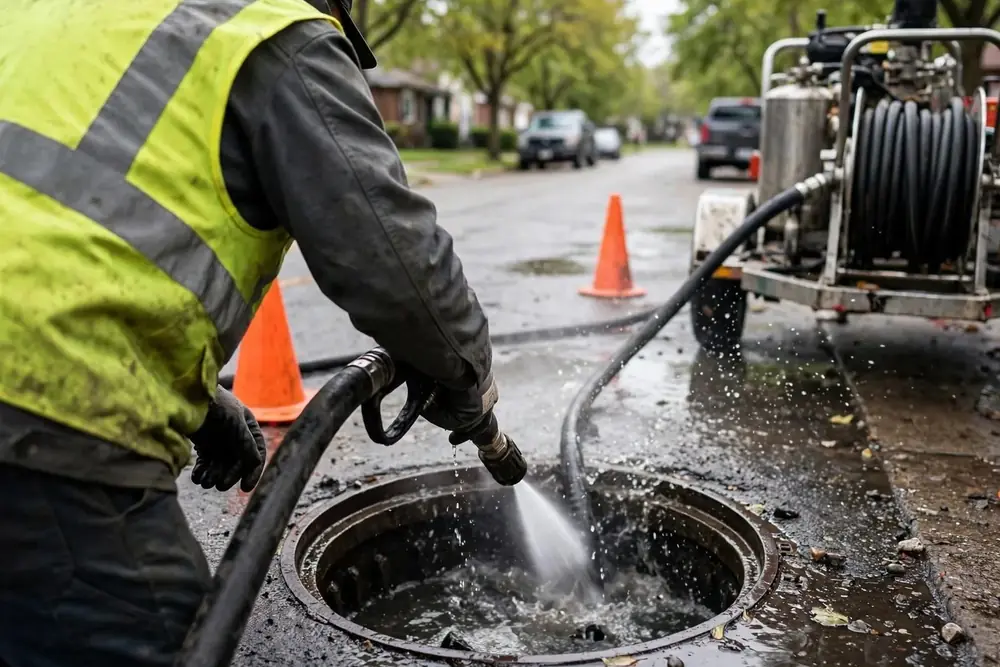
A hose with a specially shaped nozzle goes into the line through a cleanout. Water at high pressure sprays backward through small jets to pull the hose forward, and forward-facing jets break up the blockage. The debris is flushed down to the city main as the nozzle is drawn back.
The result is a pipe wall scraped close to its original diameter. A cable cuts a path, and jetting cleans the entire pipe, which is why it tends to last longer when grease is the cause.
Situations where jetting makes sense
These are the patterns that usually point to buildup rather than a single clog.
Clogs return within weeks
The cause is still coating the wall. A cable removes the plug and leaves the coating in place.
Heavy grease history
Kitchen lines in busy households collect grease that hardens into a ring inside the pipe.
Root hair in the line
Fine roots thicken at joints. Jetting can clear many of them, though roots return if the entry point stays open.
Slow drains throughout
A narrowed main line shows up as slowness in every fixture at once.
Cable or jetter?
Neither tool is better for every job. This table shows how plumbers usually choose.
| Condition | Cable | Hydro jetting |
|---|---|---|
| Single soft clog | Usually enough | Not needed |
| Heavy grease coating | Opens a path only | Cleans the full wall |
| Fine roots | Cuts a channel | Can clear more of the root mass |
| Cracked or collapsed pipe | Can snag and worsen damage | Not safe, camera first, see sewer inspection |
Same clog keeps coming back?
Call the 24/7 line and ask whether jetting fits your drains.
Camera before and after
Pressure and damaged pipe do not mix, so a camera look should come before jetting any older line. If the camera finds a crack, a collapse or a belly, the plan changes toward repair. After jetting, a second pass shows whether the pipe is clean.
That second look is what turns the service from a hope into a result. Ask to see the footage, and compare the pipe walls before and after.
Older homes and cast iron
Fountain Valley grew quickly in the 1960s, and drain lines from that era may be clay, cast iron or early plastic. Cast iron often carries rough scale on the inside, which acts like sandpaper for grease and paper. Jetting removes that scale, and the plumber watches the pressure so a weak pipe is not pushed past its limit.
If the line is too fragile for jetting, the next option is cabling plus a repair plan. Our sewer line repair page covers those cases.
What hydro jetting costs
Jetting uses more equipment than a cable, so it is priced differently. You hear the number before the work starts.
What moves the final number
Restaurants and multi-unit buildings often schedule jetting as maintenance. Ask about it if your property has a history of backups. Call (714) 750-8637.
Where jetting stops and repair begins
Jetting cleans a pipe but does not change its condition. If the camera shows damage, repairs follow the California Plumbing Code, based on the Uniform Plumbing Code (UPC), and may need a permit. Jetting a failing line to see if it holds is not a plan, so the plumber decides after the camera pass.
Keeping lines clear afterward
Jetting resets the pipe, and habits decide how long it stays clean. Keep grease out of sinks, use a strainer in showers and tubs, and flush only toilet paper. Wipes labeled flushable still catch on roots and rough joints.
A yearly camera look is a reasonable schedule for older homes with a history of backups.
Common Questions
Yes. Call (714) 750-8637 at any hour if a line is backing up. The plumber checks the pipe condition first and then decides whether to cable, jet or repair.
It can be, if the pipe is sound. A camera inspection first shows whether a line can handle the pressure. Cracked or collapsed pipe should not be jetted.
It can clear many roots from inside the pipe. If the roots enter through a crack or a joint, they can grow back unless the entry point is repaired or lined.
A cable breaks through a clog. A jetter uses water to wash the whole pipe wall. Jetting is better for grease and scale, and cabling is usually enough for a single soft clog.
It depends on the cause. A restaurant may schedule it several times a year. A home with a one-time buildup may not need it again if habits change.
A cleanout is the best access point. Without one the plumber may use a toilet removal or a roof vent, and may recommend adding a cleanout.