
Two ways water flows backward
Backflow comes in two forms. Back-siphonage happens when pressure in the supply line drops, for example after a main break or heavy firefighting demand, and water is pulled backward from a connected source. Back-pressure happens when pressure on the customer side rises above the supply pressure and pushes water backward.
In both cases, anything connected to the plumbing can be pulled or pushed in. A hose submerged in a bucket of chemicals, a lawn sprinkler line or a boiler are classic risks.
Common cross-connections
A cross-connection is any link between clean water and a possible contaminant.
| Connection | Risk | Typical protection |
|---|---|---|
| Garden hose bib | Hose in a pool, bucket or sprayer | Hose bib vacuum breaker |
| Irrigation system | Fertilizer or soil water | Backflow assembly |
| Boiler or heating loop | Treated water | Backflow preventer |
| Commercial equipment | Chemicals and food waste | Assembly set by water provider |
What a backflow preventer does
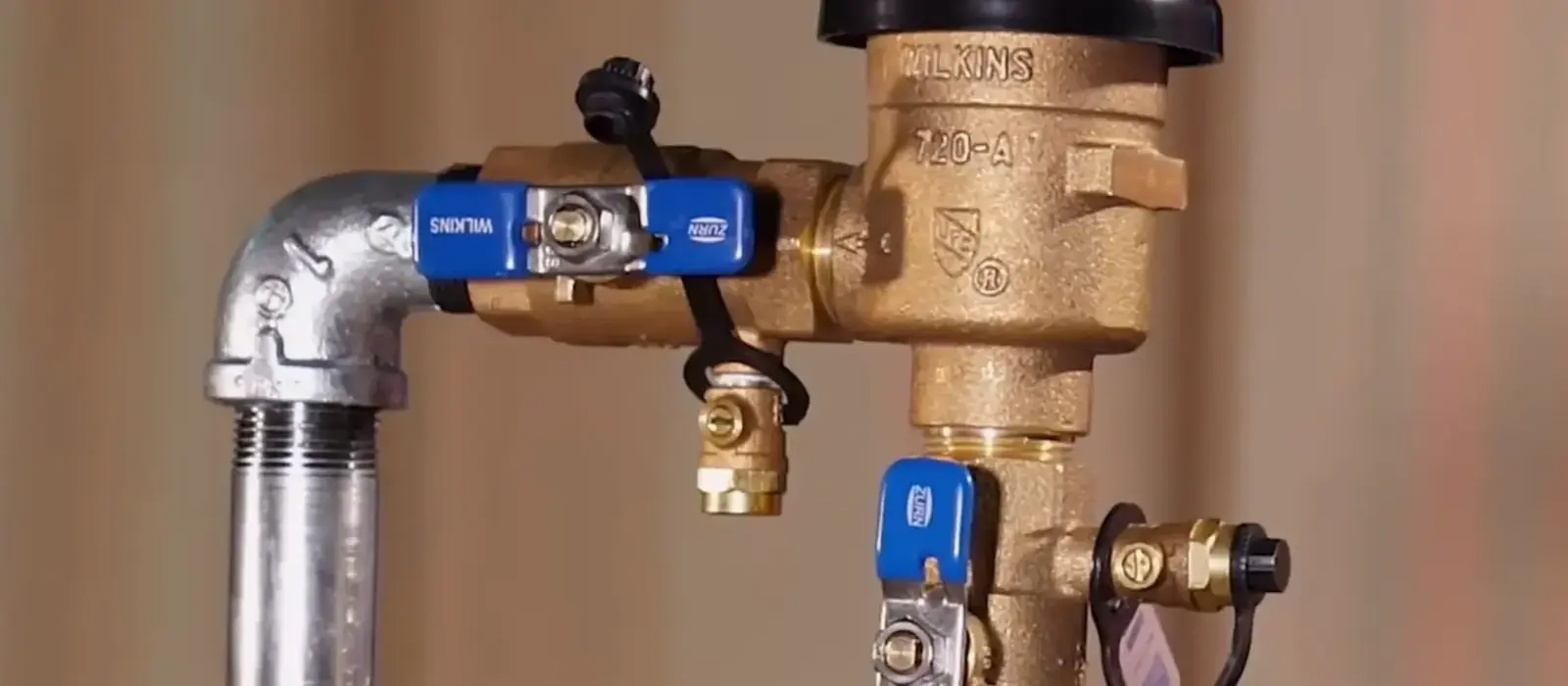
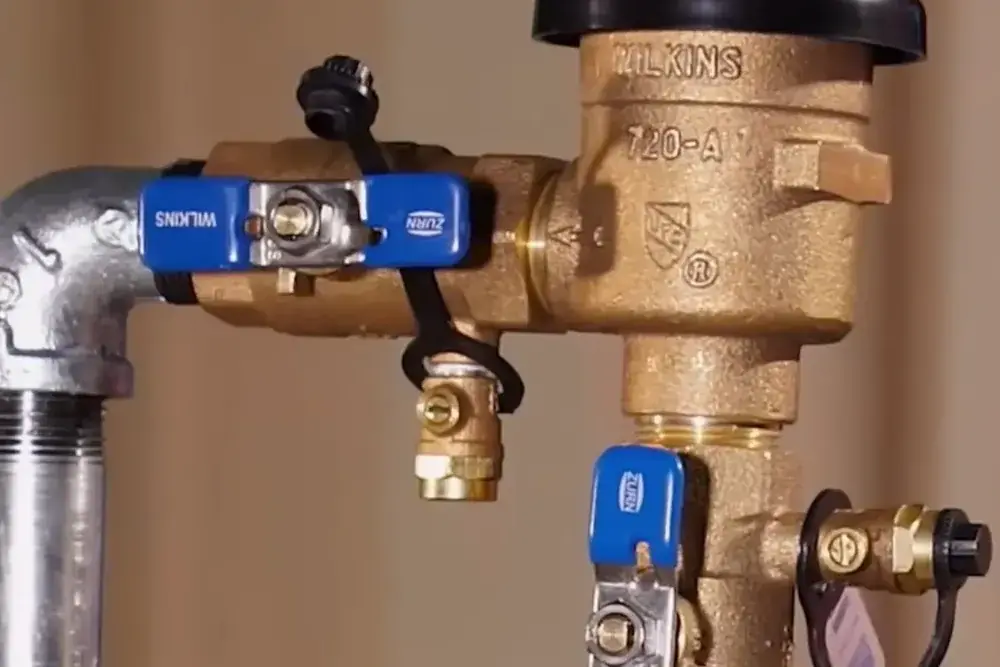
A backflow preventer is a valve assembly that lets water flow forward and blocks reverse flow. Simple devices, such as vacuum breakers on hose bibs, protect against back-siphonage. Complex assemblies, such as reduced pressure principle devices, have relief valves and test ports.
Larger assemblies need testing, usually once a year. A certified tester checks that the check valves and relief valve work. The test result goes to the water provider.
A local detail: groundwater and reuse
The City of Fountain Valley is home to the Groundwater Replenishment System at 18700 Ward Street, which Orange County Water District operates. The facility treats wastewater to drinking water standards and has a capacity of 130 million gallons per day, according to the district. It recharges the groundwater basin that supplies many Orange County cities.
A system like that depends on keeping drinking water and wastewater strictly separate. Backflow prevention at homes and businesses applies the same principle at a small scale. Ask the City of Fountain Valley which requirements apply to your property.
Source type: Orange County Water District GWRS information and City of Fountain Valley
Where homeowners meet backflow rules
Most residential cases are simple. These are the usual ones.
Irrigation systems
Many require an assembly, and the water provider may require annual testing.
Fire sprinklers
Systems connected to the water supply often have a device.
Pools and fountains
Fill lines should be protected from the pool side.
Home improvements
Adding a boiler, filtration or a lawn system can trigger a requirement.
Testing and who does it
Testing must be done by a certified backflow tester. The water provider typically sends a notice when a test is due. The tester submits the result, and a failed device is repaired or replaced and retested.
Plumbers can install and repair assemblies, and some are also certified testers. Ask when you call.
A simple habit that helps
Never leave a hose end underwater or connected to a chemical sprayer without a vacuum breaker. Keep the vacuum breaker on hose bibs. If one is missing, replace it. It is a low-cost part that protects your own water.
Why the rules exist
Water systems are pressurized networks. When pressure drops in one part, whatever is connected can flow backward into it. Rules on backflow protection exist because one unprotected connection can affect many homes, not just the one with the problem.
That is why the water provider, not the homeowner, usually decides which devices are required and when they are tested.
Backflow in everyday situations
A hose left in a muddy bucket, a sprayer attached to a garden hose without a breaker and a hose connected to a pool can all pull dirty water into the line if pressure drops. It does not take a major event. A neighbor's main break can cause it.
A hose bib vacuum breaker costs little and screws on by hand. Install one on every outdoor faucet, and replace it if it leaks.
If you get a testing notice
A notice from a water provider means a device on your property is due for testing. Do not ignore it. Contact a certified tester and schedule it by the deadline. If the device fails, repairs must be made and the test repeated.
A plumber can help if the device needs a new part. Keep the test report. It may be required again, and a lost report can delay compliance.
What to do about a backflow notice
Cross-connection control in California is set by Title 17 of the California Code of Regulations and enforced by water providers, and the California Plumbing Code, based on the Uniform Plumbing Code (UPC), covers the devices. If you receive a notice, schedule the test with a certified tester before the deadline, and do not remove the device.
Working with a plumber
A plumber can identify cross-connections, install a device and coordinate testing. For businesses, our commercial plumbing page covers the topic, and for new fixtures see our plumbing installation page.
We serve Fountain Valley and the neighboring city of Santa Ana. The service areas page explains how coverage works.
Questions Fountain Valley Homeowners Ask
Often for irrigation systems and some other connections. Your water provider can tell you what applies.
Typically once a year for assemblies that need testing. The provider sets the schedule.
It can be, since it can bring contaminants into drinking water. That is why rules exist.
A small device that screws onto an outdoor faucet and prevents siphoning back into the house.
A certified tester. Ask the water provider for approved testers.