
What a heating element does
A standard electric tank heater has two elements, one near the top and one near the bottom. Each is a metal rod that glows hot when current passes through it, much like a toaster coil sealed in a tube. A thermostat for each element decides when it runs.
The upper element heats the top of the tank first, so you get hot water quickly. The lower element then heats the rest. When one fails, the symptoms differ, which helps you pinpoint the problem before you buy a part.
Symptoms that point to an element
Match what you see to the likely cause before you shop for parts.
No hot water at all
The upper element or its thermostat has failed, or the high-limit reset has tripped.
Hot water runs out quickly
The lower element is dead, so only the top third of the tank is being heated.
Lukewarm water
A weak element, a thermostat set too low or heavy scale on the element.
Breaker trips repeatedly
An element has shorted to ground. Stop resetting it and turn the heater off.
Safety before you touch anything
Turn off the breaker that feeds the heater, then confirm the power is off with a non-contact voltage tester or a multimeter at the element terminals. A breaker label can be wrong, so never trust it alone.
The tank holds very hot water. Close the cold-water supply valve and let the water cool for some time before draining. If you are not comfortable working with household wiring, call a plumber or electrician.
How the replacement works
Turn off power and water
Switch off the breaker, test for voltage, then close the cold-water valve on top of the tank.
Drain the tank below the element
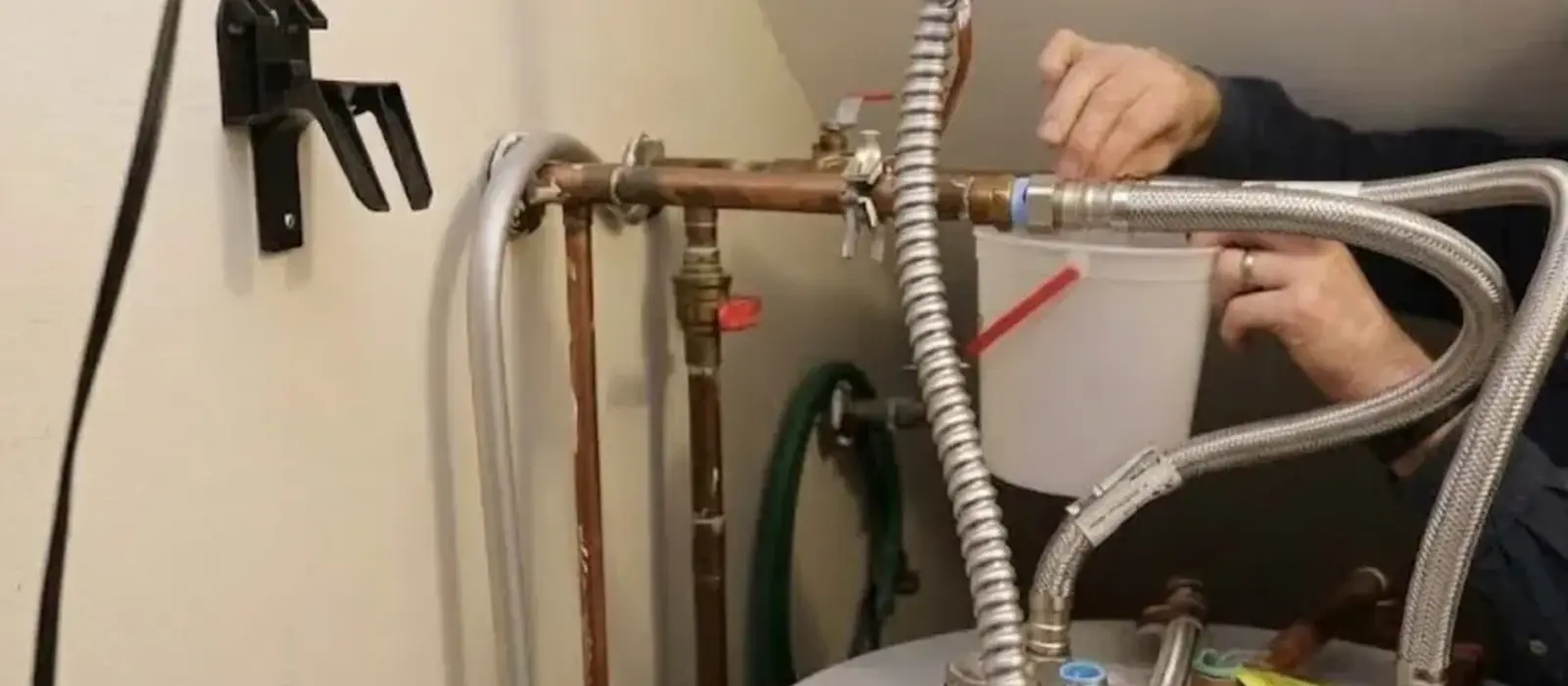
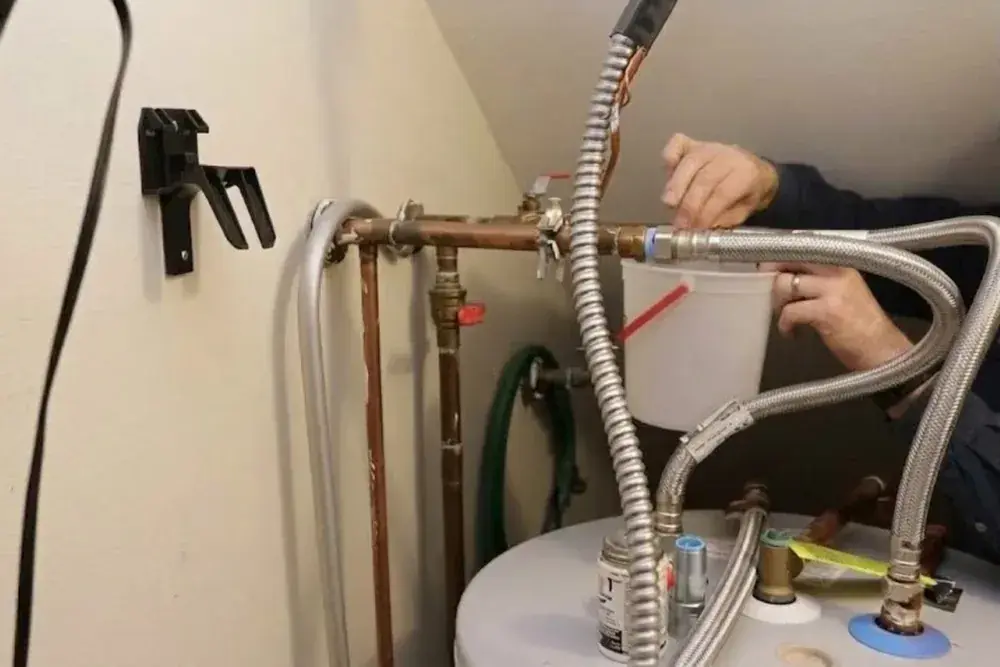
Attach a hose to the drain valve, open a hot tap to let air in and drain enough to expose the element. Many elements sit near the bottom, so a full drain is often easiest.
Test the old element
Remove the access panel and insulation, disconnect the wires and read resistance across the element terminals. No reading means a failed element.
Swap and refill
Unscrew the old element with an element wrench, fit a new one with its gasket, refill the tank fully and check for leaks before restoring power.
Never power up an empty tank
An electric element burns out in seconds if it is not submerged. After the swap, open a hot tap somewhere in the house and let water run until it flows steadily with no air, then close it. Only then switch the breaker back on.
Give the heater time to recover, then check the water temperature at a tap. If it is still cold, the thermostat or the reset button may be the problem. Check the reset button above the upper thermostat, press it once and see if it holds.
Repair or replace the whole heater?
An element swap makes sense on a healthy tank. The table shows when it does not.
| Situation | Element swap fits | Better to replace the tank |
|---|---|---|
| Tank age | Under about 8 years | Over about 10 to 12 years |
| Leaks | None | Any water from the tank body |
| Sediment | Light | Heavy, rumbling and rust-colored water |
| Past repairs | First failure | Repeated failures within a year |
What Fountain Valley's water does to elements
The City of Fountain Valley's 2026 water quality report, which covers 2025 data, lists average hardness of 217 milligrams per liter, or 13 grains per gallon, with a range of 10 to 15. The city's own FAQ treats 10 grains and above as hard water.
Minerals from hard water bake onto the surface of an element. That scale insulates the metal, so the element runs hotter and fails sooner. It also settles on the tank floor and makes the lower element work harder. Flushing the tank each year and checking the anode rod slow the process.
Source type: City of Fountain Valley 2026 Water Quality Report
Why replace elements in pairs
If one element fails because of scale or age, the other has had the same exposure. Many plumbers replace both at the same visit, since the tank is already drained and open. Matching wattage and element type matters, so read the nameplate on the heater before buying.
Use elements rated for your heater's voltage. A 240 volt element in a 120 volt circuit will not heat properly, and the reverse is a hazard.
Electrical rules that matter here
Water heater wiring follows the California Electrical Code, which is based on the National Electrical Code (NEC). Elements are wired to a dedicated 240 volt circuit with a disconnect in sight, which is why you turn off and test the breaker before you open the panel on the tank.
When to call a plumber instead
Call a plumber if the tank leaks, the breaker keeps tripping, the element will not unscrew or the heater is old. The visit includes testing the thermostats and checking the relief valve, which a parts swap alone does not cover.
If the tank is failing, our water heater replacement page explains your options, and our water heater repair page covers faults a plumber can fix on site. We serve Fountain Valley and the neighboring city of Santa Ana, and the service areas page explains how coverage works.
Questions Fountain Valley Homeowners Ask
Both can cause the same symptoms. A resistance test on the element and a voltage test at the thermostat tell them apart, and that is the sequence a plumber follows.
Hard water speeds up scale, and the City of Fountain Valley reports average hardness of 13 grains per gallon in its 2026 report. That makes scale a common cause here.
No. Match the voltage and wattage on your heater's nameplate, and choose the right style, such as screw-in or bolt-in.
It can be if you turn off power, test for voltage and drain the tank. If you have any doubt, hire a licensed professional.
Many last several years, but hard water and sediment shorten that. A yearly flush helps.