
Pick the fixture around the plumbing
The fixture you want must fit the plumbing you have. Check the number of faucet holes in the sink or countertop, the rough-in distance for a toilet and the valve type behind a shower wall. A fixture that does not match will need adapters or changes to the wall.
Bring photos and measurements to the store. If you are unsure, a plumber can check on site before you buy.
What to check for each fixture
A short checklist saves time at the store.
| Fixture | Check first | Parts often needed |
|---|---|---|
| Kitchen faucet | Hole count, sink thickness | Supply lines, mounting hardware |
| Bathroom sink | Hole spacing, drain size | Pop-up drain, supply lines |
| Toilet | Rough-in distance, flange condition | Wax ring, bolts, supply line |
| Shower or tub | Valve type, wall depth | Trim kit, cartridge, escutcheon |
The general order of an install
Turn off water
Close the angle stop or main, then open the old fixture to drain.
Remove the old fixture
Disconnect supplies and drain, loosen mounting hardware and lift out.
Check and clean
Inspect the connections, replace old shutoff valves and clean the mounting surface.
Install and test
Mount the new fixture, connect the lines, turn the water on slowly and check for drips.
Replace the small parts
Supply lines, shutoff valves and drain parts are cheap compared with the fixture, and they age. Replacing them during the install avoids a leak a month later. Old compression stops can seize or weep when turned.
Use quarter-turn ball valves where you can. They are easier to operate and last longer.
Permits and hours at the Building Division
The City of Fountain Valley Building Division is at 10200 Slater Avenue. Its phone number is 714-593-4429, and the Permit Center portal accepts applications electronically. Counter hours are Monday through Thursday, 7 a.m. to 6 p.m., and closed Fridays.
Replacing a fixture in the same place often does not need a permit. Adding a fixture or moving drain and supply lines usually does. Ask the Building Division what applies to your project before work starts.
Source type: City of Fountain Valley Building Division
Hard water and fixture choice
The city's 2026 water quality report lists average hardness of 13 grains per gallon. Scale builds on aerators, showerheads and inside cartridges. When you choose fixtures, look for aerators that unscrew easily and cartridges that can be replaced without special tools.
A water softener reduces the problem for every fixture in the house. Our water softener page explains the options.
When a DIY install is a bad idea
Skip the DIY if the shutoff valves do not close, the pipes are corroded, you are moving a fixture or the work involves gas or a slab. A mistake can flood a room or cost more to fix than the plumber would have charged.
Testing and cleanup after an install
After connecting a fixture, turn the water on slowly and watch each connection for drips. Dry the connections with a paper towel and check again after ten minutes. Run hot and cold for a minute to flush debris, then remove the aerator and rinse it.
Check under the sink the next morning. A slow drip that did not show at first often appears overnight.
Planning around the whole room
If you are replacing several fixtures, order the work so that water stays on as long as possible. Install the sink first, then the toilet, then the shower trim. Keep the old parts until everything is tested in case something does not fit.
Photograph the finished work and keep the manuals. Warranty claims and future repairs go smoothly when you have the model numbers.
Kitchen and bathroom faucets in practice
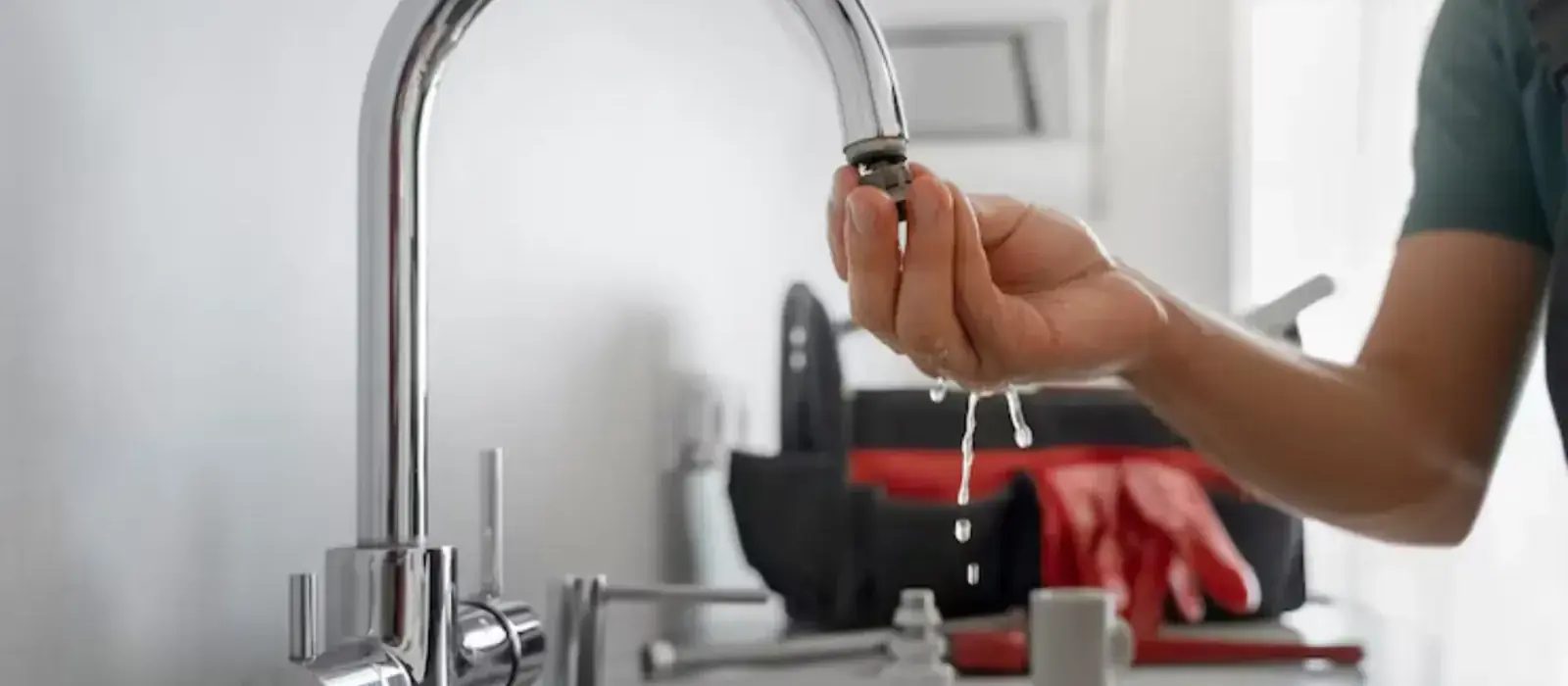
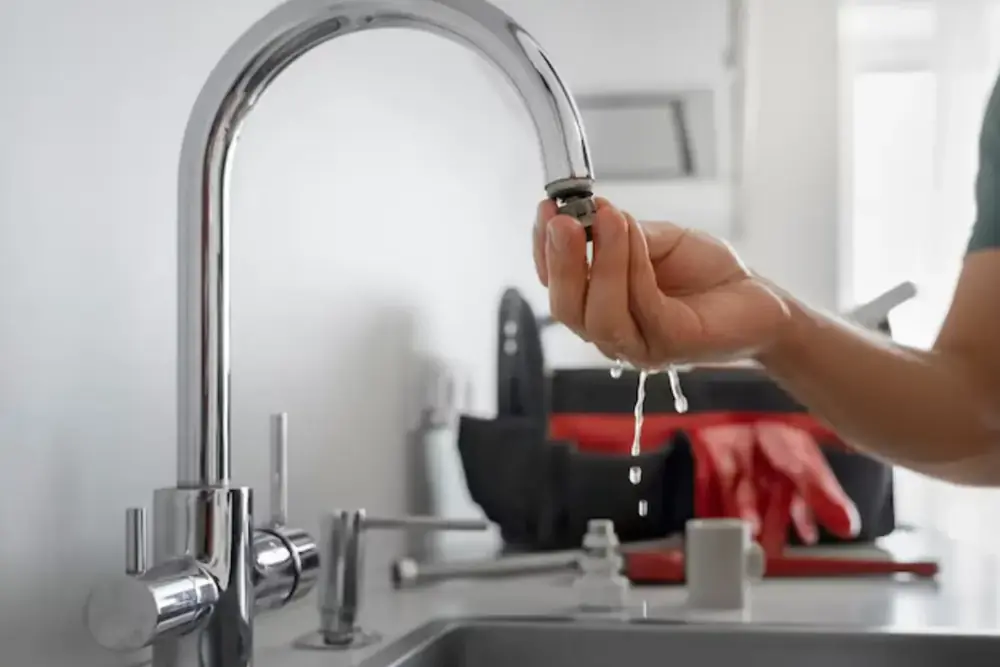
Most faucet installs take a couple of hours for a first-timer. The hardest part is usually reaching the nuts under the sink. A basin wrench makes that step manageable. Take a photo before you disconnect anything, so you can match the hoses and lines.
Pull-down kitchen faucets add a weight on the hose, and it must hang freely. Make sure nothing in the cabinet blocks it. Flush the lines for a minute before you screw on the aerator.
Showers, tubs and valves
Shower trim kits are the simplest change, since they swap the handle and plate without touching the pipes behind the wall. A new valve body is a different job. It means opening the wall, soldering or crimping fittings and testing under pressure.
Match the trim to the valve brand. A trim from another maker rarely fits. If the valve itself is leaking or will not shut off, that is a plumber's job.
Flow limits and code on new fixtures
California's CalGreen standards cap flow on new bathroom faucets at 1.2 gallons per minute, and installs follow the California Plumbing Code, based on the Uniform Plumbing Code (UPC). A new fixture may feel gentler than the one it replaced because of those limits.
Hiring a plumber
A plumber can install the fixtures you bought or help you choose. Our plumbing installation page describes the process, and our faucet repair page covers fixes for fixtures you already have.
We serve Fountain Valley and the neighboring city of Santa Ana. The service areas page explains how coverage works.
Questions Fountain Valley Homeowners Ask
Usually not for a same-location swap. Adding or moving a fixture usually requires one. Ask the Building Division at 714-593-4429.
It helps if you share the model so the plumber can confirm fit. You can also ask the plumber to recommend a model.
Often under an hour or two once the plumber has access. Old valves can add time.
Shut the main water valve for the house and call a plumber to replace the shutoff.
A clogged aerator or debris from the install. Remove and rinse the aerator.